Tag: Aceh

  • Farmer Partnerships Across Three Provinces: How PT BAS’s Business Model Protects Its Essential Oil Supply Chain

    Farmer Partnerships Across Three Provinces: How PT BAS’s Business Model Protects Its Essential Oil Supply Chain

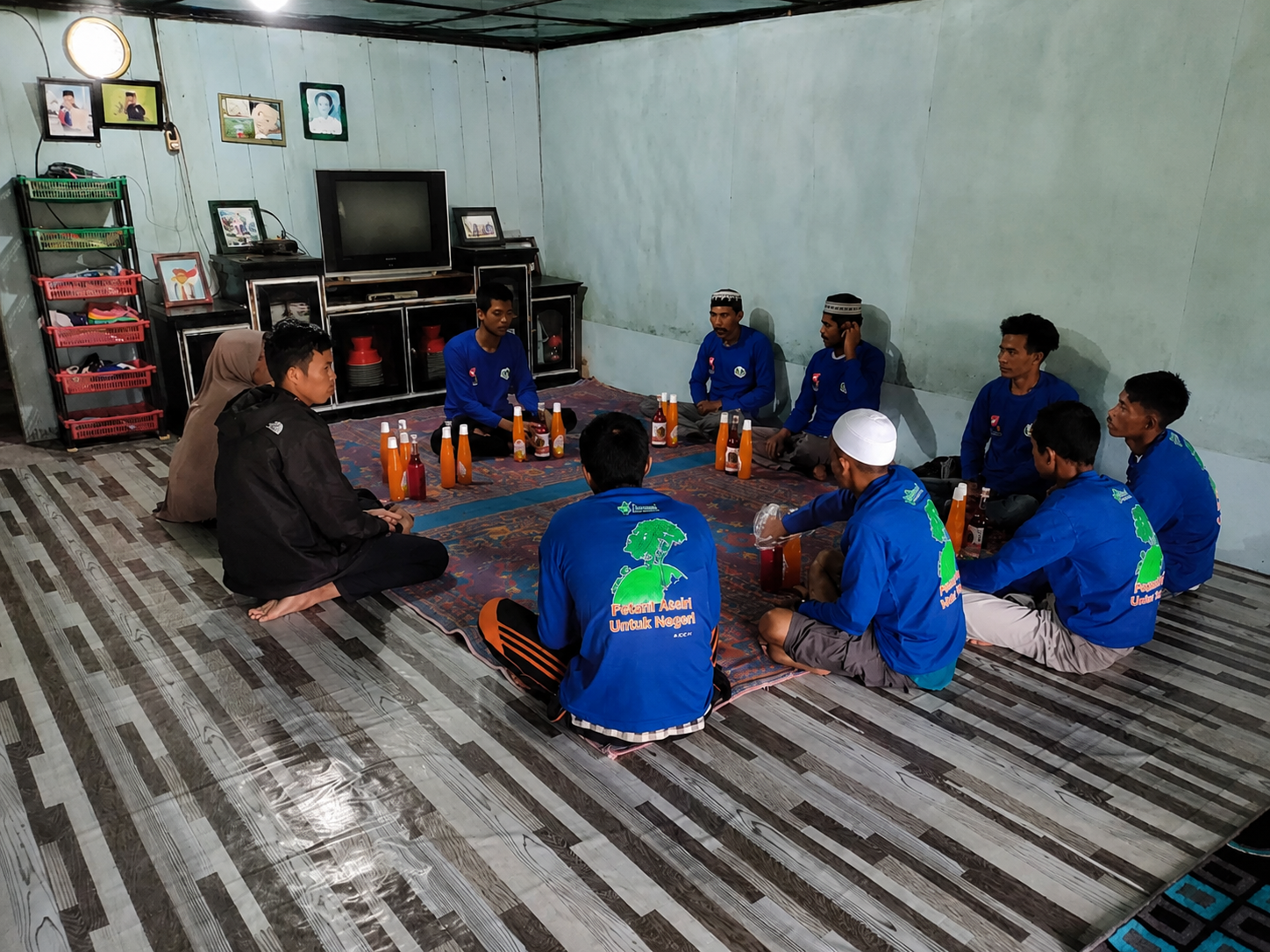
    Rather than buying up land on a large scale, PT Bentang Alam Sumatera (PT BAS) has chosen a slower path that may prove more durable: building the capacity of partner farmers. Relationships with farmers, field mentoring and land management form the foundation of the company’s entire essential oil supply chain.

    For the Medan-based exporter, that choice means its raw material sources are not concentrated in a single plantation. Supply is instead built through local networks that understand the land, seasons and commodities of their own areas — PT BAS’s partner farmers are spread across Aceh, North Sumatra and West Sumatra, with the commodities and forms of mentoring tailored to each region’s potential. A number of nature-based model management sites have also been developed in North Sumatra and Aceh.

    Two positions within the company reflect how seriously it takes this approach. Mustaqim, S.Hut., M.Si. handles production and partnerships, while M. Irfany serves as agroforestry specialist. That structure shows that partnership at PT BAS is understood not merely as a buy-sell transaction, but as a process of building community capacity while keeping the farming landscape sustainable.

    The process itself is a long one. Company activity records show a chain of mentoring that runs from meetings with patchouli farming groups, to the weighing of dried patchouli stems and leaves, to distillation using simple stills near the farms. The resulting patchouli and citronella oils are then packed into jerry cans and sent to PT BAS’s facilities for further processing — every stage requires tight coordination so raw material keeps meeting quality specifications as it moves from farm to market.

    In terms of land area, the network covers an estimated 80 hectares of patchouli plots spread from Blangkejeren through parts of North Sumatra and West Sumatra, plus around 10 hectares of citronella grass in Blangkejeren. In Besitang, Langkat Regency, farmers have developed an even more diverse planting pattern: ylang-ylang, culinary lemongrass, citronella grass, patchouli, cananga and vanilla all growing within the same area. This kind of mixed cropping pattern is in line with an agroforestry approach, in which a single stretch of land can yield several commodities at once.

    This agroforestry approach is driven by more than just land efficiency. It gives farmers more than one source of income while reducing their dependence on a single commodity. For the essential oil supply chain, both land sustainability and farmers’ income stability determine the long-term availability of raw material.

    But the model is not without its challenges. A network of smallholders scattered across mountainous and rural areas needs consistent mentoring, cultivation training, quality oversight and carefully planned logistics. With an in-house team of only seven, PT BAS depends heavily on farmers’ trust and collaboration with local stakeholders to keep all of it running.

    For patchouli farmers in Blangkejeren, or cananga and vanilla farmers in Besitang, this kind of partnership opens a path to markets that would be difficult to reach alone. In the end, that chain connects small farms in Sumatra to the perfume, cosmetics and food industries, along with other commodity buyers in a far wider market.

    Source: Compiled from the PT Bentang Alam Sumatera 2026 profile, including documentation of partner-farmer mentoring activities in Aceh and North Sumatra.
  • Tracing the North Sumatra-Aceh Patchouli Oil Shipment to London, Flagged Off by the Governor Himself

    Tracing the North Sumatra-Aceh Patchouli Oil Shipment to London, Flagged Off by the Governor Himself

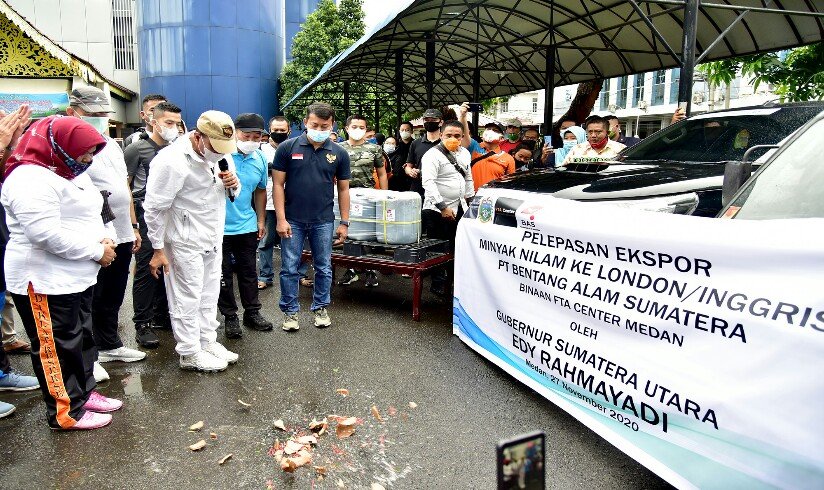
    In late November 2020, as the Covid-19 pandemic still gripped much of the business sector, the courtyard of the North Sumatra Industry and Trade Office on Jalan Putri Hijau in Medan witnessed an unusual send-off. On Friday, November 27, 2020, North Sumatra Governor Edy Rahmayadi flagged off a shipment of 600 kilograms of patchouli oil bound for London, England, the work of PT Bentang Alam Sumatera (PT BAS), an essential oil exporter based in Medan Selayang.

    The moment coincided with the handover of productive economic stimulus assistance for small businesses and farming enterprises. Governor Edy appeared upbeat. “I hope we can send off many more exports like this. It’s a symbol of our people’s prosperity,” he said, adding that he hoped such export activity would keep growing because it opens up an additional channel for local products and enterprises.

    For PT BAS, the shipment to London was more than a ceremonial send-off. A long process lay behind it: oil sourced from a network of farmers in the mountains of Sumatra had to go through collection, drying, distillation and packaging before it could meet the standards of buyers in Europe.

    Panut Hadisiswoyo, who served as president director of PT BAS at the time, said patchouli oil from North Sumatra and Aceh was among the best in quality. “Patchouli oil is a raw material used by cosmetics and perfume companies,” he said, adding that the company’s exports at the time were aimed solely at the British market, with production capacity of around 1.5 tons of patchouli oil per year.

    That claim about the quality of Aceh and North Sumatra patchouli was not just one-sided promotion. Years later, Irdika Mansur, chairman of the Indonesian Essential Oil Council, made a similar point at an international forum on patchouli and essential oils in Banda Aceh. “Aceh is a source of the best-quality patchouli oil in the world,” he said, describing Indonesia’s westernmost province as an area highly suited to patchouli cultivation.

    Indonesia’s position on the world patchouli map is no small matter. Data from the Directorate General of Plantations at the Ministry of Agriculture, widely cited by the media, shows Indonesia controls around 95% of the global patchouli oil market, with export volumes estimated at 1,200 to 1,500 tons a year to countries including Switzerland, Britain, Singapore, Spain and France. The commodity’s value depends heavily on its patchouli alcohol content and purity level, which makes quality control a critical matter starting from the moment raw material is still in farmers’ hands.

    Part of the patchouli in PT BAS’s network comes from Blangkejeren, Gayo Lues, in Aceh. After harvesting and drying, the leaves and stems are distilled into patchouli oil, then packed into jerry cans or drums before being shipped through logistics channels to their destination countries. In the perfume industry, patchouli oil is known as a base note that helps anchor and extend a fragrance’s character — a woody, earthy, warm scent favored by perfume houses, cosmetics makers and the personal care industry alike.

    In the end, the 2020 export to London illustrated a route connecting small plots in the mountains of Gayo Lues with buyers on the other side of the world. For PT BAS, that experience became a foundation for further expanding its patchouli network, along with its other essential oil and agribusiness commodities.

    Source: Compiled from reporting by Tobapos.co (November 28, 2020), Directorate General of Plantations, Ministry of Agriculture data as cited by GoodNewsFromIndonesia.id, a statement from the Indonesian Essential Oil Council as cited by ANTARA News, and the PT Bentang Alam Sumatera 2026 profile.