Tag: coffee

  • Eight Scents From the Land of Sumatra: The Flagship Products of PT Bentang Alam Sumatera

    Eight Scents From the Land of Sumatra: The Flagship Products of PT Bentang Alam Sumatera

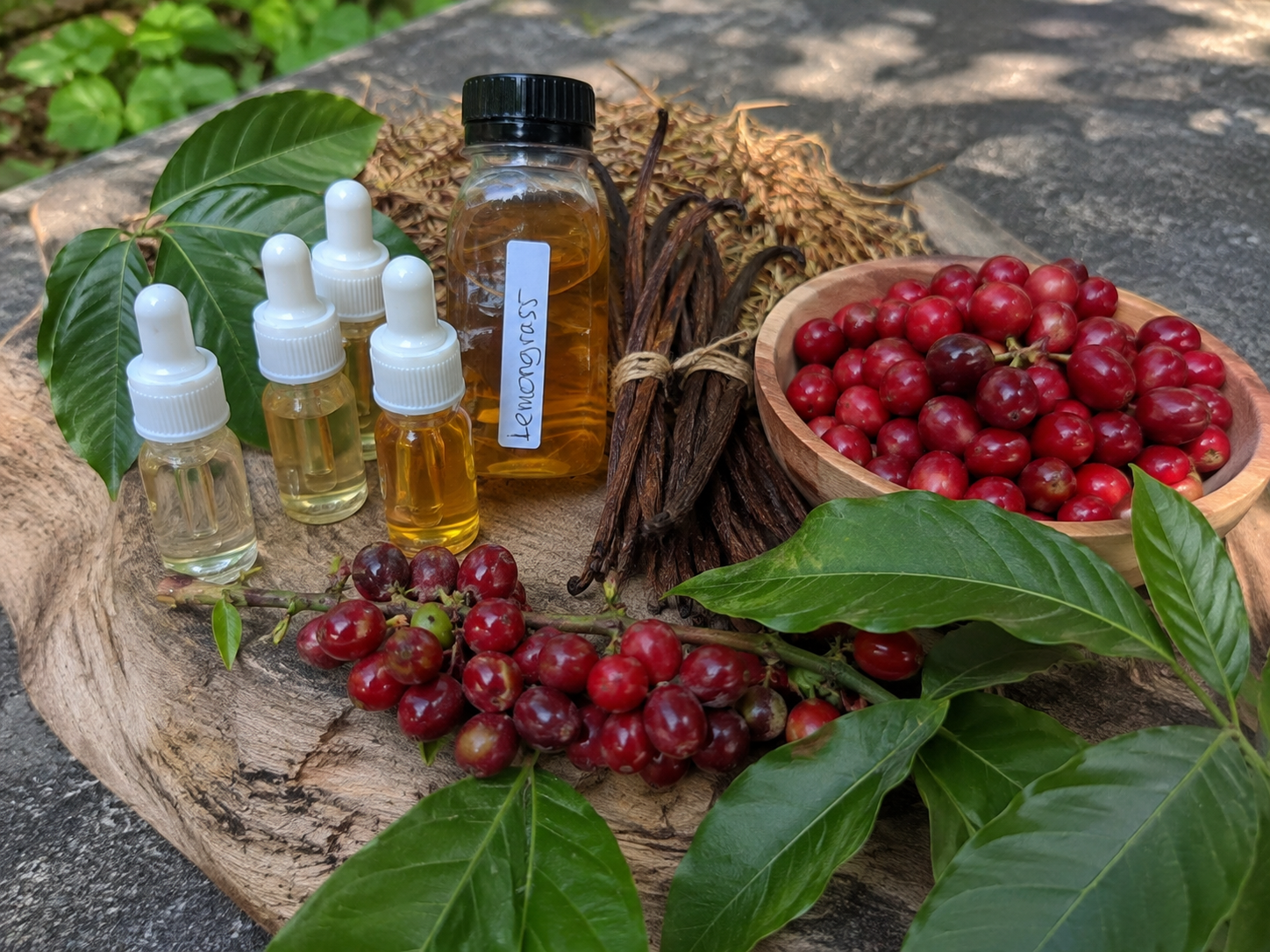
    For PT Bentang Alam Sumatera (PT BAS), essential oils are not just aromatherapy oils sold in small bottles on supermarket shelves. From its base in Medan Selayang, the company actually markets eight commodities at once: essential oils, coffee, kitchen spices, and aromatic resin from the forest — each with its own origin, character and set of buyer requirements.

    Patchouli, or Pogostemon cablin, is the commodity most closely identified with PT BAS. Its leaves and stems are dried, then distilled into what the international market knows as patchouli oil. Its woody, earthy, warm and long-lasting character makes it a favorite as a base note in perfume formulas. The supply chain is built together with farmers in Aceh, North Sumatra and West Sumatra, with a network centered on the Blangkejeren area of Gayo Lues.

    Alongside patchouli, PT BAS also offers Arabica and Robusta coffee from the highlands of Sumatra. Its Arabica coffee carries an aromatic character, lively acidity and balanced body — a profile that can be tailored for roasters or single-origin products, depending on the origin and specifications of each lot. Robusta, meanwhile, brings a bolder taste, fuller body and strong crema, a character usually sought for espresso and commercial coffee blends. Both types are supplied through the same agribusiness network across Aceh, North Sumatra and West Sumatra.

    There are also two types of lemongrass that look similar at a glance but actually come from plant groups with different functions. Citronella grass yields citronella oil through the distillation of Cymbopogon leaves, with a fresh citrus-herbal aroma commonly used in fragrance, home care products and insect-repellent formulas. Culinary lemongrass, or Cymbopogon citratus, is the one more familiar in the kitchen, used as a seasoning for soups and curries and as an ingredient in herbal tea. Within PT BAS’s network, citronella grass is grown in Blangkejeren and Besitang, while culinary lemongrass is centered in Besitang, in Langkat Regency.

    Cananga and vanilla round out the portfolio on the fragrance and food side. Cananga flowers, or Cananga odorata, grown in Besitang, Langkat Regency, have a strong, sweet, warm and slightly woody floral aroma — the raw material for cananga oil sought by the fragrance industry. Vanilla, or Vanilla planifolia, goes through a curing process that turns its green pods dark brown, yielding a sweet, creamy, warm and complex aroma that is fought over by the bakery, confectionery, beverage and premium fragrance industries.

    Perhaps the most unexpected item on this list is benzoin, an aromatic resin from trees of the Styrax genus that grow in the forests of Tapanuli, North Sumatra. Several varieties are known there, from Toba benzoin and bulu (hair) benzoin to durame benzoin. Once dried and sorted, the resin carries a balsamic, sweet, warm, woody aroma with a hint of smokiness when burned. Besides its use as incense, benzoin also has a long history as a fragrance and aromatic-extraction ingredient — a commodity that extends PT BAS’s portfolio into non-timber forest products.

    Ultimately, these eight commodities reflect a strategy that does not rely on a single type of product. Essential oils, coffee, kitchen spices and non-timber forest products each have very different market characters, but they all rest on the same foundation: clear provenance, consistently maintained quality, and a traceable supply relationship.

    Source: Compiled from PT Bentang Alam Sumatera’s product mapping documents and the PT Bentang Alam Sumatera 2026 profile.
  • Traceable Sourcing Is Becoming the Price of Entry in Global Fragrance and Coffee Markets

    Traceable Sourcing Is Becoming the Price of Entry in Global Fragrance and Coffee Markets

    In the global perfume and coffee industries, quality and price are no longer the only currencies that matter. Buyers increasingly want to know exactly where a raw material came from, who grew it, and how it reached the still or the roaster. That ability — commonly called traceability — is quietly becoming a new condition for entry into global fragrance and coffee supply chains, a shift now reaching even small, farmer-linked exporters on the Indonesian island of Sumatra, such as PT Bentang Alam Sumatera (PT BAS).

    The global patchouli oil market — the base note behind countless perfumes, and the commodity most closely tied to PT BAS — is projected to grow at a compound annual rate of about 4.2% between 2026 and 2035, according to market research firm IndexBox. Indonesia alone is estimated to supply more than 70% of the world’s patchouli oil, making the country the gravitational center of the industry. But that growth is not only about volume: the perfumery and fragrance segment, which absorbs roughly a third of global patchouli demand, is increasingly shaped by the procurement strategies of major fragrance houses actively seeking sustainable, traceable supply.

    Fragrance giants such as Givaudan, Firmenich, IFF, Symrise, Mane, and Robertet — among the world’s largest patchouli buyers — are said to be leading that push. On the production side, Indonesia’s own major players are adapting: PT Indesso Aroma, one of the world’s largest patchouli oil producers, has built its sourcing model around three pillars — traceability, environmental stewardship, and social empowerment. It is a framework not unlike the farmer-partnership model PT BAS has run on a far smaller scale across Aceh, North Sumatra, and West Sumatra.

    A similar shift is unfolding around coffee, one of PT BAS’s eight commodities. The European Union’s Deforestation Regulation (EUDR) requires seven forest-risk commodities, including coffee, to come with precise plot-level geolocation data and proof that the land was not deforested after late 2020, before entering the EU market. After two earlier postponements, the rule is now set to take effect on December 30, 2026, for large and medium operators, and June 30, 2027, for micro and small enterprises, according to reporting by Tempo.co in August 2026.

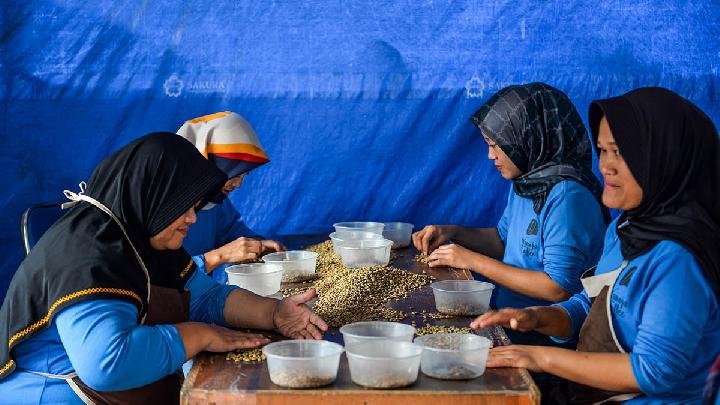
    For the small farmers scattered across Sumatra’s highlands who grow both coffee and essential-oil crops, that is no small ask. Most of the world’s coffee — Indonesia’s included — still moves through layered networks of local collectors before reaching an exporter, meaning origin data often gets lost along the way. Research from the Economic Policy Research Centre has found that Indonesian smallholder coffee farmers already contend with stagnating yields and limited access to credit, even before the added cost of mapping farms and documenting supply chains to meet new traceability standards.

    That is precisely where PT BAS’s farmer-partnership model becomes relevant. The company’s documented operations already include farmer group meetings, on-site weighing of harvests, and distillation that can be traced back to specific growing areas such as Blangkejeren in Gayo Lues, Aceh. That kind of direct relationship with growers is harder to build overnight than a certificate is to print — though turning it into the formal, geolocation-ready documentation international buyers now expect remains a real task for a company whose internal team numbers just seven people.

    For a small exporter, traceability can cut either way: a new cost if compliance requirements outpace its scale, or a competitive edge if a clear, verifiable origin story becomes a selling point to premium buyers. As long as the market keeps moving in that direction, companies that already have direct ties to the farmers in their supply chain start from a stronger position than most — a foundation grown in the field, not just written on paper.

    Source: Compiled from IndexBox’s “Patchouli Oil Market Forecast 2026-2035,” a Perfumer & Flavorist report on PT Indesso Aroma’s sourcing model, August 2026 reporting by Tempo.co on EUDR implementation for Indonesian coffee, research from the Economic Policy Research Centre on the EUDR’s impact on smallholder coffee farmers, and the PT Bentang Alam Sumatera 2026 company profile.