Tag: supply chain

  • Farmer Partnerships Across Three Provinces: How PT BAS’s Business Model Protects Its Essential Oil Supply Chain

    Farmer Partnerships Across Three Provinces: How PT BAS’s Business Model Protects Its Essential Oil Supply Chain

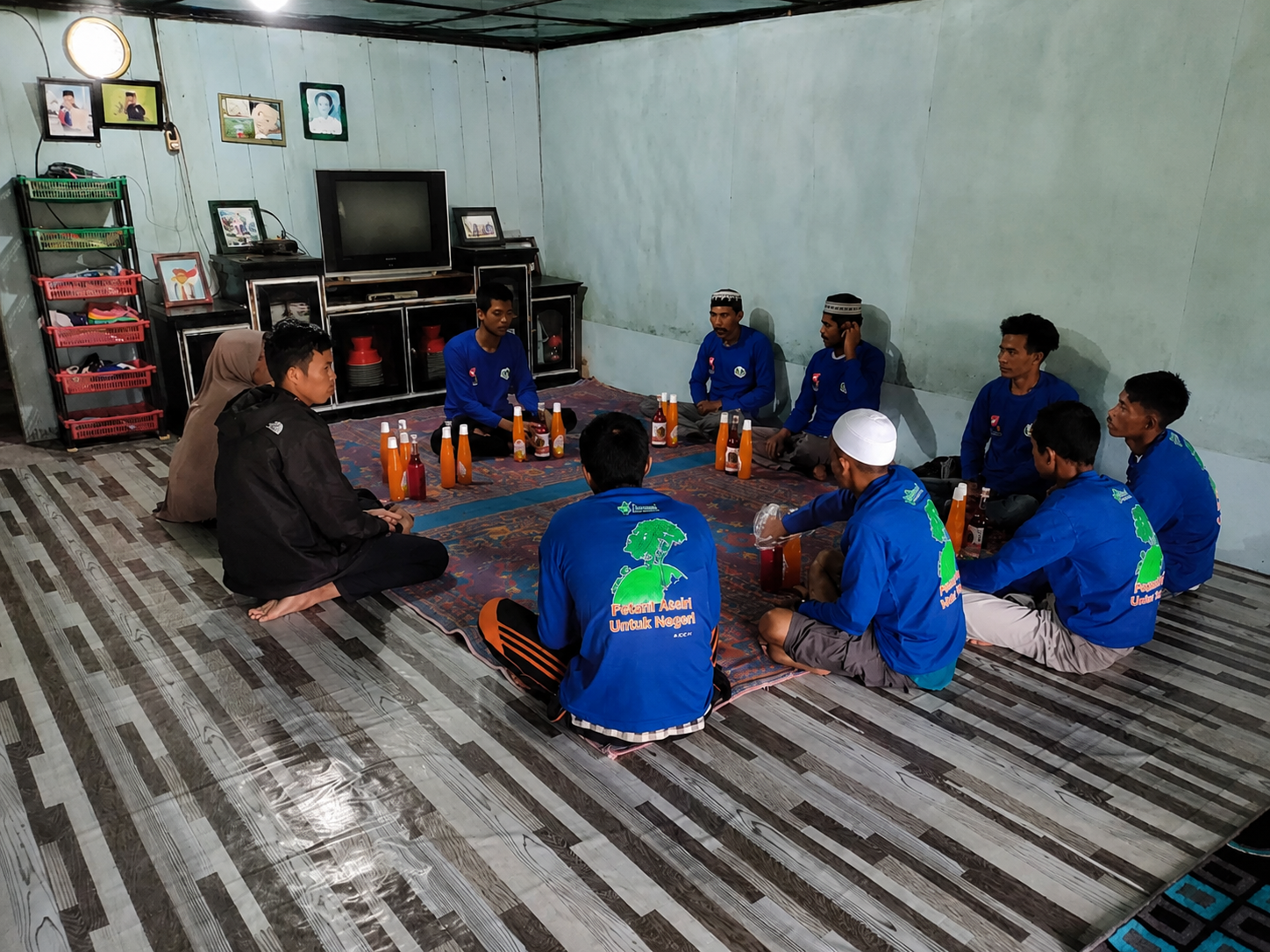
    Rather than buying up land on a large scale, PT Bentang Alam Sumatera (PT BAS) has chosen a slower path that may prove more durable: building the capacity of partner farmers. Relationships with farmers, field mentoring and land management form the foundation of the company’s entire essential oil supply chain.

    For the Medan-based exporter, that choice means its raw material sources are not concentrated in a single plantation. Supply is instead built through local networks that understand the land, seasons and commodities of their own areas — PT BAS’s partner farmers are spread across Aceh, North Sumatra and West Sumatra, with the commodities and forms of mentoring tailored to each region’s potential. A number of nature-based model management sites have also been developed in North Sumatra and Aceh.

    Two positions within the company reflect how seriously it takes this approach. Mustaqim, S.Hut., M.Si. handles production and partnerships, while M. Irfany serves as agroforestry specialist. That structure shows that partnership at PT BAS is understood not merely as a buy-sell transaction, but as a process of building community capacity while keeping the farming landscape sustainable.

    The process itself is a long one. Company activity records show a chain of mentoring that runs from meetings with patchouli farming groups, to the weighing of dried patchouli stems and leaves, to distillation using simple stills near the farms. The resulting patchouli and citronella oils are then packed into jerry cans and sent to PT BAS’s facilities for further processing — every stage requires tight coordination so raw material keeps meeting quality specifications as it moves from farm to market.

    In terms of land area, the network covers an estimated 80 hectares of patchouli plots spread from Blangkejeren through parts of North Sumatra and West Sumatra, plus around 10 hectares of citronella grass in Blangkejeren. In Besitang, Langkat Regency, farmers have developed an even more diverse planting pattern: ylang-ylang, culinary lemongrass, citronella grass, patchouli, cananga and vanilla all growing within the same area. This kind of mixed cropping pattern is in line with an agroforestry approach, in which a single stretch of land can yield several commodities at once.

    This agroforestry approach is driven by more than just land efficiency. It gives farmers more than one source of income while reducing their dependence on a single commodity. For the essential oil supply chain, both land sustainability and farmers’ income stability determine the long-term availability of raw material.

    But the model is not without its challenges. A network of smallholders scattered across mountainous and rural areas needs consistent mentoring, cultivation training, quality oversight and carefully planned logistics. With an in-house team of only seven, PT BAS depends heavily on farmers’ trust and collaboration with local stakeholders to keep all of it running.

    For patchouli farmers in Blangkejeren, or cananga and vanilla farmers in Besitang, this kind of partnership opens a path to markets that would be difficult to reach alone. In the end, that chain connects small farms in Sumatra to the perfume, cosmetics and food industries, along with other commodity buyers in a far wider market.

    Source: Compiled from the PT Bentang Alam Sumatera 2026 profile, including documentation of partner-farmer mentoring activities in Aceh and North Sumatra.
  • Traceable Sourcing Is Becoming the Price of Entry in Global Fragrance and Coffee Markets

    Traceable Sourcing Is Becoming the Price of Entry in Global Fragrance and Coffee Markets

    In the global perfume and coffee industries, quality and price are no longer the only currencies that matter. Buyers increasingly want to know exactly where a raw material came from, who grew it, and how it reached the still or the roaster. That ability — commonly called traceability — is quietly becoming a new condition for entry into global fragrance and coffee supply chains, a shift now reaching even small, farmer-linked exporters on the Indonesian island of Sumatra, such as PT Bentang Alam Sumatera (PT BAS).

    The global patchouli oil market — the base note behind countless perfumes, and the commodity most closely tied to PT BAS — is projected to grow at a compound annual rate of about 4.2% between 2026 and 2035, according to market research firm IndexBox. Indonesia alone is estimated to supply more than 70% of the world’s patchouli oil, making the country the gravitational center of the industry. But that growth is not only about volume: the perfumery and fragrance segment, which absorbs roughly a third of global patchouli demand, is increasingly shaped by the procurement strategies of major fragrance houses actively seeking sustainable, traceable supply.

    Fragrance giants such as Givaudan, Firmenich, IFF, Symrise, Mane, and Robertet — among the world’s largest patchouli buyers — are said to be leading that push. On the production side, Indonesia’s own major players are adapting: PT Indesso Aroma, one of the world’s largest patchouli oil producers, has built its sourcing model around three pillars — traceability, environmental stewardship, and social empowerment. It is a framework not unlike the farmer-partnership model PT BAS has run on a far smaller scale across Aceh, North Sumatra, and West Sumatra.

    A similar shift is unfolding around coffee, one of PT BAS’s eight commodities. The European Union’s Deforestation Regulation (EUDR) requires seven forest-risk commodities, including coffee, to come with precise plot-level geolocation data and proof that the land was not deforested after late 2020, before entering the EU market. After two earlier postponements, the rule is now set to take effect on December 30, 2026, for large and medium operators, and June 30, 2027, for micro and small enterprises, according to reporting by Tempo.co in August 2026.

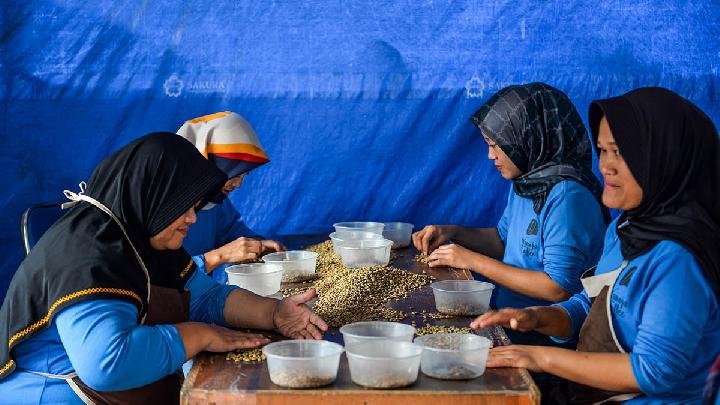
    For the small farmers scattered across Sumatra’s highlands who grow both coffee and essential-oil crops, that is no small ask. Most of the world’s coffee — Indonesia’s included — still moves through layered networks of local collectors before reaching an exporter, meaning origin data often gets lost along the way. Research from the Economic Policy Research Centre has found that Indonesian smallholder coffee farmers already contend with stagnating yields and limited access to credit, even before the added cost of mapping farms and documenting supply chains to meet new traceability standards.

    That is precisely where PT BAS’s farmer-partnership model becomes relevant. The company’s documented operations already include farmer group meetings, on-site weighing of harvests, and distillation that can be traced back to specific growing areas such as Blangkejeren in Gayo Lues, Aceh. That kind of direct relationship with growers is harder to build overnight than a certificate is to print — though turning it into the formal, geolocation-ready documentation international buyers now expect remains a real task for a company whose internal team numbers just seven people.

    For a small exporter, traceability can cut either way: a new cost if compliance requirements outpace its scale, or a competitive edge if a clear, verifiable origin story becomes a selling point to premium buyers. As long as the market keeps moving in that direction, companies that already have direct ties to the farmers in their supply chain start from a stronger position than most — a foundation grown in the field, not just written on paper.

    Source: Compiled from IndexBox’s “Patchouli Oil Market Forecast 2026-2035,” a Perfumer & Flavorist report on PT Indesso Aroma’s sourcing model, August 2026 reporting by Tempo.co on EUDR implementation for Indonesian coffee, research from the Economic Policy Research Centre on the EUDR’s impact on smallholder coffee farmers, and the PT Bentang Alam Sumatera 2026 company profile.